Location has been disabled. Location sharing is required to view local results around your location. To use it, you must enable the permission to access the location in the browser settings.
Location has been disabled. Location sharing is required to view local results around your location. To use it, you must share the permission to access the location. To do this, click the lock icon to the left of the address bar and release the appropriate permission.
Location has been disabled. Location sharing is required to view local results around your location. To use it, you need to share the permission to access the location in your device settings under "Privacy and security -> Location services -> Your used web browser (eg. Safari/Chrome/...)".
Location has been disabled. Location sharing is required to view local results around your location. To use it, you must share the permission to access the location. To do this, click the icon to the left of the address bar and then reload the page.
Location has been disabled. Location sharing is required to view local results around your location. To use it, you must share the permission to access the location. To do this, click the icon to the right of the address bar.
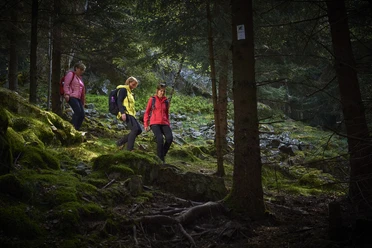
Du wanderst über Relikte des Außenwalles einer keltenzeitlichen Burg – zu erkennen ist der Wall an der Böschung, die einem Ackerrain ähnelt. Optisch erkennst du den genauen Verlauf des Außen- und Innenwalles an der gelben Markierungsfarbe, die an den Bäumen zu sehen ist. Mit großer Sicherheit waren die keltenzeitlichen Burgen Heiligtümer. Das bedeutende Kulturdenkmal steht unter Schutz.
Beim Begriff „Burg“ hat jeder ein bestimmtes Bild vor Augen. Mit der klassischen mittelalterlichen Höhenburg (z. B. am Rhein) hat die keltenzeitliche Burg aber wenig gemein. Da musst du umdenken!
Der Außenwall hat im Großen und Ganzen die Form eines Kreises (mit Dellen), der Durchmesser beträgt ca. 220 Meter. Er ist insgesamt ca. 750 Meter lang. Es ist zu vermuten, dass die Burg früher als Steinbruch diente und Steine der Wälle im Ort Dotzlar verwendet wurden, beispielsweise für Hausfundamente.
Heute steht das überragende Kulturdenkmal unter Schutz.